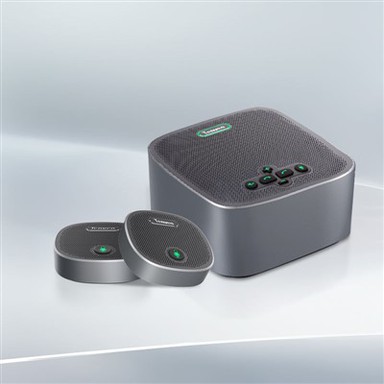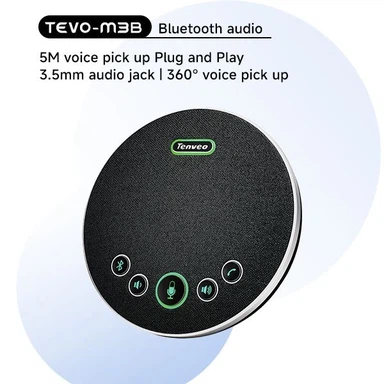


If you need video conference camera, Tenveo will give you best service.
Apr 01, 2017
Video conferencing cameras: A beginner's guide
Check out equipment choices for the three major types of video conferencing: desktop conferencing, small-group conferencing and large-group conferencing.
Cut back on the expense and carbon footprint of constant traveling and add another layer of interaction to your business meetings with video conferencing. Not only are these digital meetings eco-friendly, they provide a more personal way to collaborate over long distances than simply talking on the phone. This beginner's guide will help you determine which video conferencing cameras are right for you, and learn a few details that will make your virtual business meetings more successful.
There are three major types of video conferencing: desktop conferencing, small-group conferencing and large-group conferencing. Depending on your needs, your equipment may be nothing more than a webcam and a headset or could be as complicated as a television broadcast, with several high-quality cameras.
Single-User Desktop Video Conferencing
When you're first starting out with video conferencing, if you're just using it for informal purposes like
communicating with colleagues every now and then, you might not need anything more complex than a webcam and a
video-enabled instant messaging system like Skype. These basic video conferencing tools will not offer the
professional feel that may be desired for communications with critical customers or other parties, but it will
allow you to see the person you're speaking with.
Webcams range from built-in cameras in laptops to high-definition video conferencing cameras with a 1280x720 pixel resolution and 30 frames per second, like the FREETALK by Everyman HD. Many webcams have built-in microphones, but you can always purchase a headset to improve sound quality.
Free programs that support video chat include the previously mentioned Skype, Apple's iChat, Windows Live Messenger, Yahoo Messenger and AOL Instant Messenger. Many of these programs offer special effects like video backdrops, and some can capture video of chats for later playback.
Video Conferencing for Small Businesses
Recent advances in technology have dramatically improved image quality, and modern video conferencing cameras make virtual meetings an efficient option for small groups and crucial communications. These group video conferencing solutions go beyond consumer-level video-calling services to offer HD-quality video, desktop views, whiteboard sharing, slideshows and other options that enable all the same interactions as a face-to-face conference.
For small-group interactions, video conferencing cameras used in conjunction with desktop computers may be enough.
Monthly paid services like Tenveo Conferencing allow unlimited video interactions for 100+ people,
and are used in conjunction with a high-quality webcam.
Large-group video conferencing often requires more complicated equipment, particularly if you want the best quality video and audio. Such a setup can reach hundreds of thousands of dollars in cost, but offer broadcast-quality results that can make it seem as if all conference participants are in the same room, even if they're located all over the globe.
Professional-quality, large-group video conferencing requires several high-quality cameras,
multi-directional microphones and projection screens. They use a lot of bandwidth, and can
require dedicated servers in some cases. Typically non-portable, they are often set up permanently in a boardroom.
If a company needs this sophisticated digital meeting technology only on rare occasions,
renting a local video conferencing space from companies like Technoloy co.,Ltd may be the best option.