

Tenveo Tell You Why Should You Use An Omnidirectional Microphone
Sep 09, 2017
Tenveo Tell You Why Should I Use An Omnidirectional Microphone

Question:
I am hesitant to use an omnidirectional microphone. Why would I want to use one?
Answer:
Six Reasons to Use an Omni-directional Mick instead of a Unidirectional
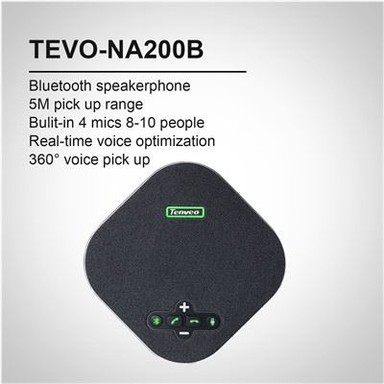
Due to the ever increasing desire for louder PA systems and even louder monitor systems, it is generally true that an omnidirectional microphone will provide less gain before feedback than a similar quality unidirectional microphone if both mics are located within Critical Distance*. However, once a microphone is located outside of Critical Distance, its directionality becomes much less crucial to gain before feedback. And in those situations, an omnidirectional microphone is often the better choice. Especially when it comes to the video meeting on the Internet. Tenveo omni-directional microphone will give you the best results at the audio and video conference sessions.
Here are 6 reasons why it is usually better to use Tenveo omni-directional microphones in video and audio conference sessions:
• Less Wind Noise
The rear acoustic ports that are present on every unidirectional microphone are also additional openings into which wind can enter. Also wind blowing by the rear ports can create turbulence and that causes wind noise. An omni has no rear ports so wind noise is minimized.
• Less Popping from Plosive Sounds
Those darn rear ports are also to blame for the plosive "P", "T", and "B" sounds that can occur when a talker is too close to a unidirectional microphone. Though an omnidirectional mic can also be "popped", it is much more resistant than a unidirectional.
• No Bass Build Up due to Proximity Effect
An omnidirectional mic does not exhibit a build-up of bass ("boominess") when the talker is close. Proximity effect, as this is known, is a characteristic of unidirectional microphones. Eliminate the rear ports and there would be no proximity effect, but the microphone would then be an omni.
• Less Handling and Vibration Noise
As most handling and vibration noise consists of low frequencies, the lack of proximity effect with an omni equates to less of this type of noise.
• May be Used Upside Down as well as Right Side Up
As an omnidirectional mic hears equally well in all directions, it works whether it is right side up or upside down. While using a microphone upside down rarely happens with handheld designs, it is a common occurrence with tiny clip-on lavalier mics.
• No Chance of Speaking Outside of the Polar Pattern
Many talkers pay little attention to where the microphone is located on a lectern, so they often wander away from the front of the mic without realizing the sonic consequences. Speaking into the rear or sides of a unidirectional microphone will result in a very low level and muffled audio quality. This is not a problem with an omni mic.
So, next time try Tenveo omni-directional microphone , particularly if the room is quite reverberant and the microphone is located far from the loudspeakers. It might be the better mic for the application.