


Enterprise Video Conferencing Camera Selection Procedure
Jun 09, 2018
Enterprise Video Conferencing Camera Selection Procedure
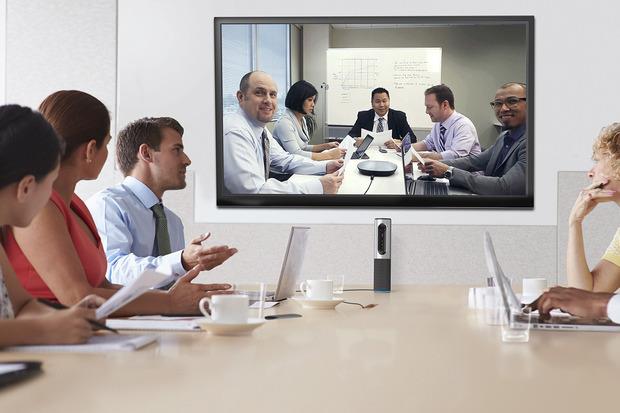
Understanding technical standards is a major benchmark for SMEs in selecting video conferencing cameras. The omni-directional microphone manufacturer is a portable conference phone product that can not only conduct high-quality Internet telephony conferences on the Internet through the interface of the computer, but also can use the headphone jack as a speaker and microphone for wireless mobile phones. Hands-free calling equipment for high-quality wireless mobile phone conferences. Its classic and elegant style is easy to carry. The microphone pickup direction can be selected according to the conference scene and is suitable for use in conference rooms and offices.
First, the pixel value is an important target that affects the quality of the camera, and is also an important indicator of the merits of the camera. The professional conference HD camera is a high-tech office equipment that uses the Internet to hold remote project meetings, remote training, business exchanges, video recruitment, and personnel education. The omni-directional microphone is a portable conference phone product that can not only perform high-quality Internet telephony conferences on the Internet through the interface of the computer, but also can use the headphone jack as a speakerphone and microphone hands-free calling device of the wireless mobile phone. , conduct high-quality wireless mobile phone conferences. Its classic and elegant style is easy to carry. The microphone pickup direction can be selected according to the conference scene and is suitable for use in conference rooms and offices. The product pixel value of early launch is generally around 100,000. Due to the low technical content, it is now on the edge of elimination. At present, the pixel value of mainstream products is generally about 2 million. It is also not necessary to consider pixel values blindly. Because the product with higher pixel values has stronger ability to parse images, when the camera is working, the ability of the computer to process data (data) is also required to be higher, otherwise the picture will be generated. Delay, which affects the composition: transmission of terminal equipment, digital communication networks (hu ì y 。).
Second, the resolution is camera resolution (analysis analysis; in-depth analysis) ability to identify images. Of course, it is directly related to the quality of CCD/CMOS. Can generally be divided into camera resolution and video resolution of two kinds, that is, the static screen capture (b ǔ zhu ō) resolution and dynamic screen capture resolution. In the actual application of the composition: terminal equipment and digital communication network, it is generally higher than the video resolution. The types of resolutions available on the camera in the market are also different, so you should pay attention when purchasing. Some resolutions refer to the interpolation resolution that these products can achieve with the software. Compared with the hardware resolution, there is still a certain gap.
Third, the lens is an important part of the camera, camera sensor elements can be divided into CCD and CMOS. A CCD (Charge Coupled Device) is a high-end technology device used for photographic imaging, and a CMOS (Complementary Metal-Oxide Semiconductor) device is used for a lower image quality (Character). Among the products, its advantage is that the manufacturing cost is lower than that of the CCD and the power consumption is also much lower. This is also the reason why many products adopting the USB interface do not require external power supply. At present, the dimensions of the CCD device are mostly 1/3 inch or 1/4 inch. At the same resolution, it is better to select a larger device size.
In addition to the above factors, companies need to find out about the following conditions.
Whether the video conferencing products provided by the manufacturers can be compatible with other brand products; what kind of service level the videoconferencing provider can provide, whether it can provide stable (interpretation: stability and stability; no change) audio and video transmission (pass); video Whether the conference system can work in the IP standard series, such as the H.323 standard; whether the video conference system supports multi-point conferences; whether the user needs additional funds to invest in hardware and software when multi-point video conferences are connected; How long does the videoconferencing system go into the market? How do we integrate with future systems and technologies? Have the system providers made detailed strategic plans (designing large projects or making plans) for this purpose? These are also important for the selection of SME videoconferencing systems.

