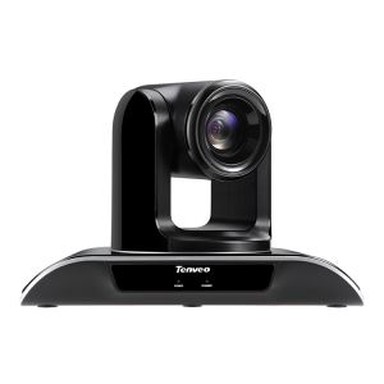


Video conferencing manufacturers will reveal the difference between HD and SD for you
Oct 25, 2017

Video conferencing manufacturers will reveal the difference between HD and SD for you
What does HD mean? Is it a clear picture or a recorded format? 720p, 1080i, or 1080p? These different indicators so that ordinary users simply can not distinguish, and now there are many users still stay in the cable TV and DVD stage, not knowing that they are only to support more than 500 lines of SD signal source.
People have been living in the SD screen for decades, and not only about 400 lines of SD even if the use of video conferencing TV professional video conferencing camera (520 line) is also far below the HD entry level 720 lines, Only those hundreds of thousands of worth of HD conference camera is fully in line with HD1080i indicators. So we are now talking about HD because the program source scarce, at the starting line to lose a fairly thorough, let alone late HD restore. You know, HD program source can be done cut off a picture, is a beautiful photo. It has 1080 effective scanning lines, twice the traditional standard (480 lines in the NTSC system, and 576 lines in the PAL and SECAM formats), can achieve a clear, beautiful picture. These images with sharp effects can really convey the impact of the theme of the screen.

HD compared to traditional SD, with five features:
1, HD has a powerful error correction function. Using the MPEG-2 compression method (or codec) using inter-frame compression, the impact of data loss will be far greater than the DV standard data loss impact. So the use of the HDV standard error correction code to achieve more accurate than the DV system error correction function. Moreover, by converting the method of DV correction only in the track into a multi-track error correction method, the error correction function can be remarkably improved, and the fault tolerance for data loss can be greatly enhanced.
2, HD using MPEG-2 as a compression codec method. The MPEG-2 compression method for digital broadcasting and DVD can also be used for HDV. Can achieve effective compression, while maintaining high-quality HD screen. Therefore, using the same bit rate as the DV standard, high-resolution, HD-picture recording and playback can be achieved. In order to use MPEG-2 to compress a large amount of HD picture data (which is far more than the SD picture data) requires a very large signal processing circuit. However, due to the development of semiconductors and signal processing technology, the codec can now be used as a standard for personal devices.
3, HD support two types of recording system. The HD standard has two types of recording systems: the 720p (line-by-line) specification and the 1080i (interlaced) specification.
4, HD sound quality and CD as well. HD MPEG-1 Audio Layer II is used as an audio compression, enabling you to enjoy near CD quality.
HD, an indicator over the traditional 720 × 576 resolution SD signal, it will be more than 500 lines of video images to 1080 line clarity, plus HD 16: 9 wide-screen mode, which means that can see 6 times Details of the original SD program. 1080i is an internationally recognized digital HD standard television standard with twice the image quality over DVD.
Since HD TV will come into the future tens of thousands of households, which is the trend, supporting the HD products should also be the time debut, video conferencing with the camera, HD video capture cards are oncoming winds. HD resolution video camera can guarantee "authentic", when playing video does not reduce the image quality. According to the standard, you can record HD images in commonly used DV tape, the sound quality is also better.